


Crude Drugs

Plant Details
Plant ID
PLN008
Crude Drug ID
CRD2
Plant Name
Euphorbia thymifolia L.
Common Name
Chhoti dudhi
Scientific Name
Euphorbia thymifolia L.
Vernacular Name
aghududhika or choti-dudhi, Sweet kerusa, Dudiya, Bonayeti, Chinna
Plant Description
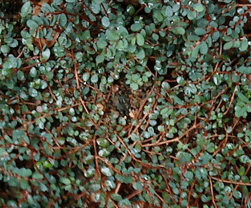
Euphorbia thymifolia L. is an important medicinal plant used in traditional system of medicine. During survey, it has been found that E. prostrata and E. hirta are used as substitute due to similar names and phenotypic characters. In this study, phenotypic, anatomical characters and ISSR marker based studies were carried out to delineate these species. Phenotypic characters i.e. distribution of hairs on capsules, and stipules morphology; anatomical characters i.e. thickness of xylem region and pith region in the stem and midrib size in the leaf are distinguishing characters. These characters integrated with ISSR based molecular fingerprinting showed species-specific demarcation in Euphorbia species. "
Plant Classification
Kingdom
Plantae
Phylum
Streptophyta
Class
Magnolipsida
Order
Malpighiales
Family
Euphorbeaceae
Genus
Euphorbia
Species
thymifolia L.
Variety/Line/Chemotype
Distribution
It is distributed throughout tropics except North Australia. It occurs throughout India in plains and low hills, ascending to 5,500 ft. in Kashmir, frequently found in waste lands, along road-sides and wall sides under humid conditions, gravel walks, grasslands, abandoned fields, etc.
Use
It is traditionally used as a blood purifier, sedative, haemostatic, stimulant, astringent in diarrhea and dysentery, anthelminthic, demulcent, laxative. It is also given in cases of flatulence, constipation; in chronic cough; as an antiviral in bronchial asthma and paronychia, in bowel complaints, in amenorrhea and gonorrhea. The fresh plant is considered as galactagogue; used in ophthalmia and other eye troubles, sores, atrophy, dysentery and breast pain; useful for diarrhea and painful bleeding piles. It possesses aphrodisiac and age-sustaining properties. The plant is also used as an anti-pyretic, in chronic cold, menstrual disorders, urinary tract infections, skin diseases, in acne vulgaris and as a tonic in menorrhagia.
Chemical Constituents
The plant contains apigenin, quercetin, kaempferol, p-coumaric acid, protocatechuic acid, caffeic acid. Euphorbol, β amyrin, bixanin, carvacrol. Phenolics, tannins, cymol, limonene, thymofolinoates A, thymofolinoates B, Iso-mallotinic acid, Sterols viz. taraxerol, tirucallol, campesterol
Drug Part :
Aerial Part
Habbit
Prostrate herb
Chemical Constituents 12
The plant contains apigenin, quercetin, kaempferol, p-coumaric acid, protocatechuic acid, caffeic acid. Euphorbol, β amyrin, bixanin, carvacrol. Phenolics, tannins, cymol, limonene, thymofolinoates A, thymofolinoates B, Iso-mallotinic acid, Sterols viz. taraxerol, tirucallol, campesterol.
It is traditionally used as a blood purifier, sedative, haemostatic, stimulant, astringent in diarrhea and dysentery, anthelminthic, demulcent, laxative. It is also given in cases of flatulence, constipation; in chronic cough; as an antiviral in bronchial asthma and paronychia, in bowel complaints, in amenorrhea and gonorrhea. The fresh plant is considered as galactagogue; used in ophthalmia and other eye troubles, sores, atrophy, dysentery and breast pain; useful for diarrhea and painful bleeding piles. It possesses aphrodisiac and age-sustaining properties. The plant is also used as an anti-pyretic, in chronic cold, menstrual disorders, urinary tract infections, skin diseases, in acne vulgaris and as a tonic in menorrhagia.
It is traditionally used as a blood purifier, sedative, haemostatic, stimulant, astringent in diarrhea and dysentery, anthelminthic, demulcent, laxative. It is also given in cases of flatulence, constipation; in chronic cough; as an antiviral in bronchial asthma and paronychia, in bowel complaints, in amenorrhea and gonorrhea. The fresh plant is considered as galactagogue; used in ophthalmia and other eye troubles, sores, atrophy, dysentery and breast pain
Euphorbia prostrata Euphorbia hirta
It is a softly hispid prostrate herbs. Stem puberulous, slender, cylindrical, pale green but often pink in color when fresh, becoming grayish green or dark purplish on drying. Stems are with white latex, 10-20 cm in length with a diameter from 1 to 3 mm; branches radiating, slender, reddish and pubescent. Leaves are simple, opposite, elliptic, oblong or ovate, 4-8 mm long and 2-5 mm wide with rounded apex, oblique base, small, unequal sided at base. The petiolate mostly green, but often coppery red when fresh, becoming grayish green or dark purplish on drying. The lamina is oval-oblong or obliquely oblong. Apex is obtuse or rounded. Margin is dentate towards apex and smooth toward the base. Cyathia in axillary clusters. Involucre campanulate, c. 8 mm long; glands 4. Male flowers 1-4, ebracteolate.
Aerial part: Leaves are 3-5 x 2.5-3cm in size, green on upper surface and purplish green on lower surface, opposite, oval shaped, apex rounded, margin entire, petiole short and purplish; stems are purple, divided into nodes; roots are 1-1.5 cm thick at base and tapering to end, fibrous, odour characteristic, taste bitter.
Leaf: Epidermal cells are elongated and covered with cuticle on both surfaces. Single layer palisade region is present. Lower epidermis is followed 1-2 layers of collenchyma region. Parenchyma layer is 2-4 cell thick, present inner to the collenchyma. Vascular bundle is crescent shape and consisting of xylem above and phloem below. Vascular bundle is surrounded with half circle of thin layered elongated rectangular cells. Stem: stem shows single layer of epidermis covered with cuticle. Epidermal cells are thin walled, elongated but somewhere oval shaped with presence of multicellular uniseriate trichomes. Cortex region consist of 6-7 layers of thin layered parenchymatous cells. Sclerenchymatous fibre cells are also present in cortex region. Vascular bundle conjoint, collateral endarch and open. Pith consists of parechymatous cells containing small amount of starch grains. Root: Root shows presence of 3-4 layers of thick walled brown coloured cork cells. Below this 2-3 layered parenchymatous elongated cells are present. It also contains lacticiferous canals within. Below this parenchymatous phloem are present. Xylem consists of radially arranged xylem vessels occasionally in small group or isolated.
Total ash: 7.99 ± 0.02 Acid insoluble ash: 1.72 ± 0.13 Sulphated ash: 10.99 ± 0.12 Water soluble extractive value: 25.38 ± 0.78 Hydro-alcoholic soluble extractive value: 28.05 ± 0.60 Alcohol soluble extractive value: 11.23 ± 0.74
Descriptive Part
Crude Drugs
| ID | Drug Part Name | |
| CRD2 | Aerial Part |