


Crude Drugs
Plant Details
Plant ID
PLN005
Crude Drug ID
CRD1
Plant Name
Tephrosia purpurea
Common Name
Sharapunkha; Ayurvedic: Sharapunkhaa, Vishikha-punkhaa, Sarpokaa. Unani: Sarponkhaa. Siddha/Tamil: Kattu-Kolingi, Paavali, Mollukkay, Kollukkayvelai
Scientific Name
Tephrosia purpurea
Vernacular Name
Hindi name: Sarphonk, Sharpunkha. Rajasthani: Masa. Tamil: Kolinchi
Plant Description
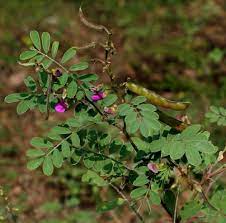
Tephrosia purpurea, belonging to the Fabaceae family, is a flowering plant with a widespread presence across tropical regions. Frequently encountered as a weed in neglected areas, it also serves as a popular choice for green manure cultivation in various regions. Its habitat spans across India and Sri Lanka, thriving even in impoverished soils.
Plant Classification
Kingdom
Plantae
Phylum
Streptophyta
Class
Magnolipsida
Order
Fabales
Family
Fabaceae
Genus
Tephrosia
Species
purpurea
Variety/Line/Chemotype
Distribution
Tephrosia purpurea is a common wasteland weed species. Native plants of Africa, Southeast Asia Australia, the Western part of the Pacific, China, Sri Lanka, and India. In India, it is mainly found in the areas of Andhra Pradesh, Haryana, Rajasthan, and Tamil Nadu.
Use
Root- anthelmintic, diuretic, antirheumatic, antidiarrhoeal, antiasthmatic, anti-inflammatory, depurative, alexipharmic, antidote for snake-bite, in ulcers, enlargement of spleen, dyspepsia, elephantiasis, bronchitis, leaver trouble. Leaf - Tonic, antigonorrhoeic, antisyphilitic, in disease of lungs and chest, pile. Root-bark - in obstinatecolic.
Chemical Constituents
Drug Part :
Aerial Part
Habbit
It is a highly branched, sub-erect, herbaceous perennial herb.
Chemical Constituents 12
Flavonoids such as rutin, purpurin, purpurenone and purpuritenin and quercetin. Retenoids like deguelin, elliptone, rotenone, tephrosin. Sterols such as sitosterol.
According to Ayurveda, plant is digestible, anthelmintic, antipyretic, alternative, cures diseases of liver, spleen, heart, blood, tumors, ulcers, leprosy, asthma, poisoning etc. According to Unani system of medicine, root is diuretic, allays thirst, enriches blood, cures diarrhea, useful in bronchitis, asthma, liver, spleen diseases, inflammations, boils and pimples; Leaves are tonic to intestines and a promising appetizer. Good in piles, syphilis and gonorrhea. Plant is used in kidney, liver, spleen, heart and blood related disorders . The dried herbs are effective as tonic, laxative, diuretics, and used in the treatment of bronchitis, bilious febrile attack, boils, pimples and bleeding piles. An extract of pods is possesses analgesic and anti-inflammatory activities.
Plant possesses anticarcenogenic, antibiotic, antidiabetic, immunomodulator, antiinflammatory, analgesic, wound healing, antioxidant, hepatoprotective, antiulcer, antibacterial, antihelicobactor and antileishmanial activities
NA
It is a branched, erect, puÂberulent, perennial herb, 40-90 cm in high. Leaves are light green, rachis 7-13 cm. leaflets oblong-elliptic, oblanceolate-elliptic, or obovate-elliptic 2-2.6 x 0.7-0.9 cm in size; stem is light green and circular shaped; flowers are purple; pods slightly curved, 3.0-5.0 x 0.4-0.45 cm in size.
Aerial part: It is a branched, erect, puÂberulent, perennial herb, 40-90 cm in high. Leaves are light green, rachis 7-13 cm. leaflets oblong-elliptic, oblanceolate-elliptic, or obovate-elliptic 2-2.6 x 0.7-0.9 cm in size; stem is light green and circular shaped; flowers are purple; pods slightly curved, 3.0-5.0 x 0.4-0.45 cm in size.
Leaf Midrib: Epidermis is made up of rectangular and radically elongated cells and covered with cuticle on both upper and lower surfaces. Lower epidermal cells are smaller in size and form unicellular hairs. Lower epidermis is followed by 2-5 layers of collenchyma cells. Vascular bundle is crescent shaped, comprising xylem region in the inner side and phloem region outer side. Xylem is mainly made up of xylem vessels and tracheids. Leaf Lamina: Palisade cells are present on upper sider epidermis in the lamina. Upper palisade parenchyma is composed of 3-4 layer palisade cells and lower palisade layer is 2-3 layers thick. Between both palisade cells single layer of spongy parenchyma cells are present. Stem: Outline irregular in shapes. Epidermis is covered with thick cuticle. Below the epidermis 2-4 layers collenchyma regions. This region is follows 5-8 layers of thin walled rounded to oval parenchymatous cells. Some of the cells are filled with chlorophyll. Parenchymatous zone is interrupted by patches of sclerenchymatous pericycle which are highly lignified. It is present in form of arch above vascular bundle. Below this parenchymatous phloem is present. Xylem is arranged radially. Xylem vessels are mostly found singly or in a group of 2-4. Pith cells containing rhomboidal calcium oxalate crystals and starch grains.
Visual Taste
Total Ash: 8.27 ± 0.05; Acid-insoluble ash: 1.03 ± 0.04; Sulphated ash: 12.19 ± 0.20; Water soluble extractive: 23.88 ± 1.30; Hydro-alcohol soluble extractive: 25.95 ± 0.60; Alcohol soluble extractive: 16.13 ± 0.45. # Note: Value in percent (dry weight basis)
1. Council of Scientific and Industrial Research, New Delhi, India.
2. National Medicinal Plant Board, Ministry of AYUSH, Govt. of India
3.Data Source: Dr. Narendra Kumar, Sr. Scientist, Botany and Pharmacognosy Department, CSIR-Central Institute of Medicinal and Aromatic Plants, Kukrail Picnic Spot Road, Post Office CIMAP, Lucknow-226015, U.P. India Ph: +91-522-2718661; Fax: +91-522-2718509; E-mail: narendrakumar@cimap.res.in
Descriptive Part
Crude Drugs
| ID | Drug Part Name | |
| CRD1 | Aerial Part |